THE CYCLON PURSUIT
Ève Magot, 2019
“What do you see? What I see is time passing. Tonight, as a world exclusive, I’ve come to offer you time passing.
Here, it’s a cyclone, imagine it big, tropical, powerful. A cyclone destroys everything in its path. Let’s go. Come, we’ll dance in my eye, it will be calm.
My name is Eve, I’m 37 years old. What do you see when I tell you my name is Eve?
I’ve already died three times. Here, I can reborn and be whoever I want to be.”
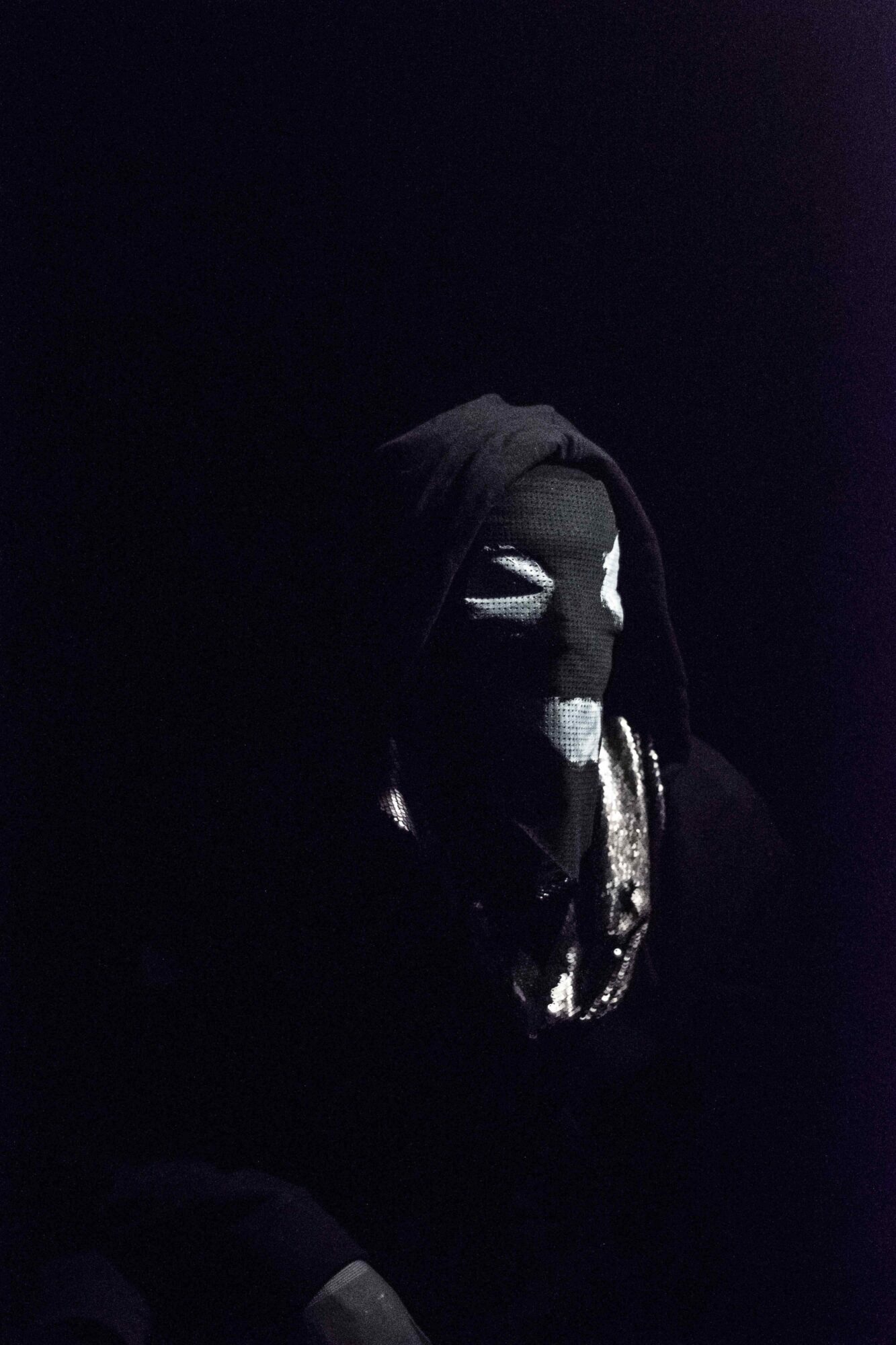
The Cyclone Pursuit starts from an intimate desire, an inner need for uprising: how to deconstruct a world, a system whose foundations leave little room for individuals to freely trace their existence, their transformations, their experiences, beyond norms and prescriptions? This choreographic piece thus takes its origin in a deep need of insubordination to the enclaves decreed by a world that smells of obsolescence, to draw the plans of a renewal.
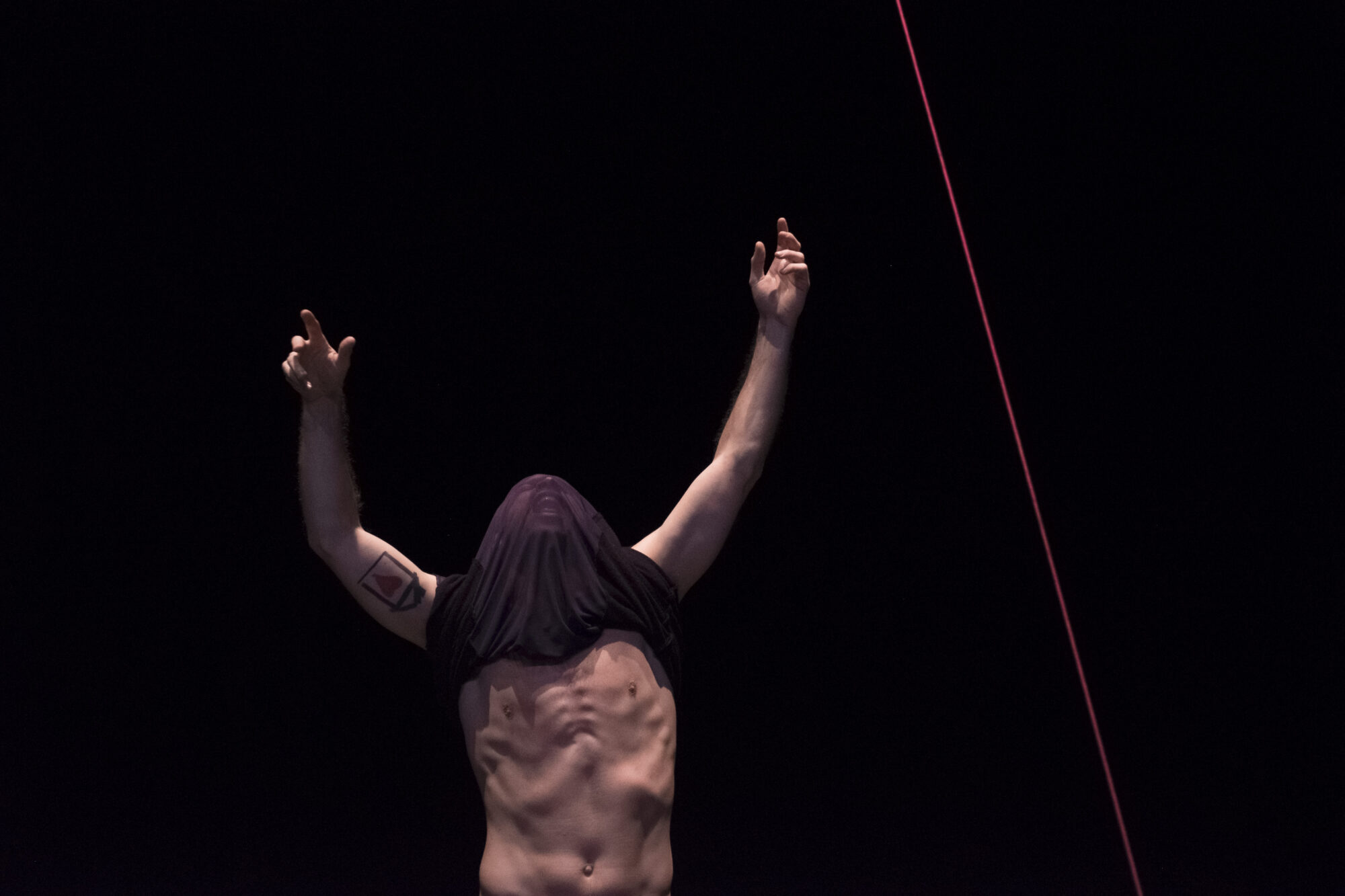
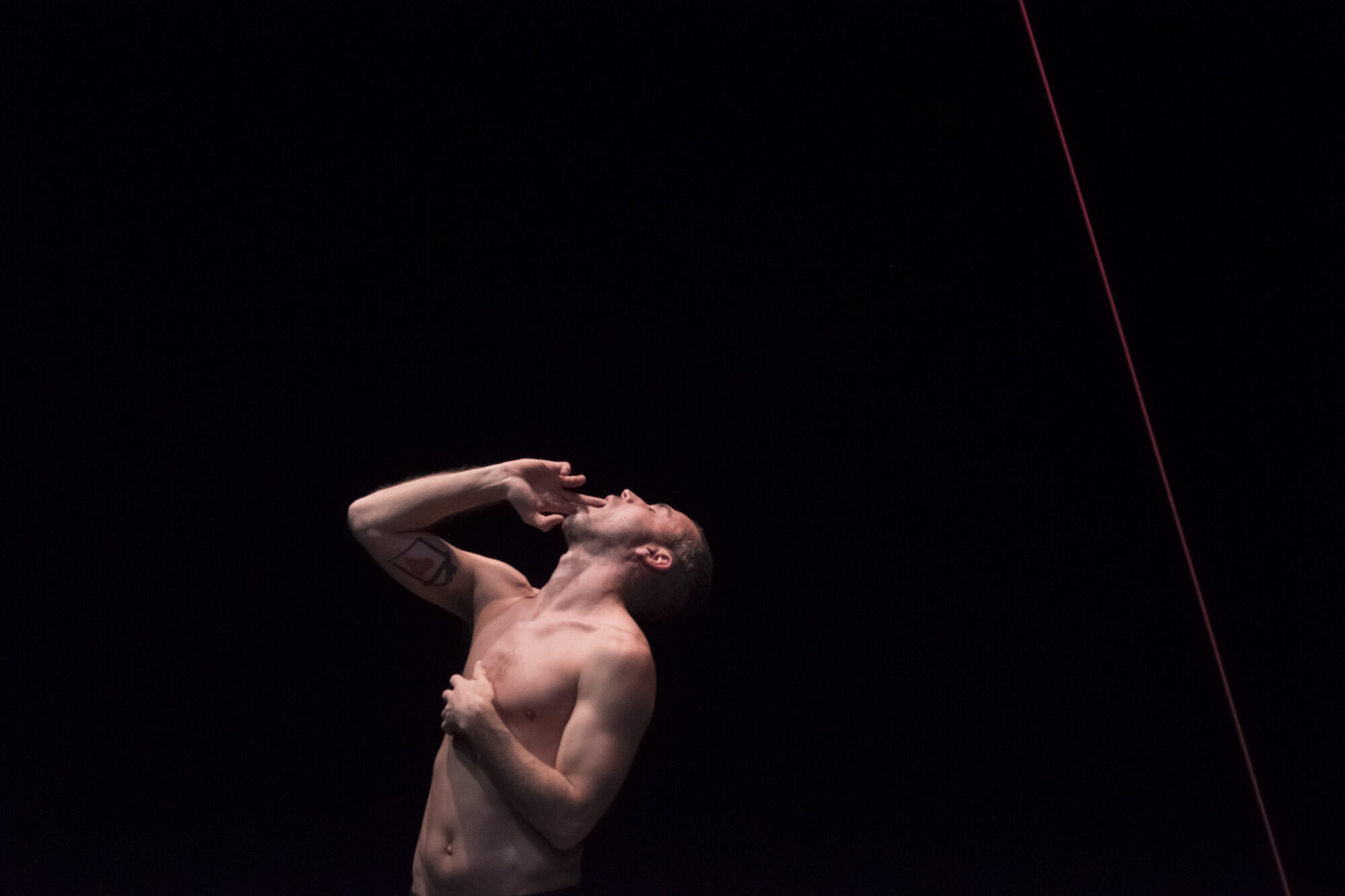
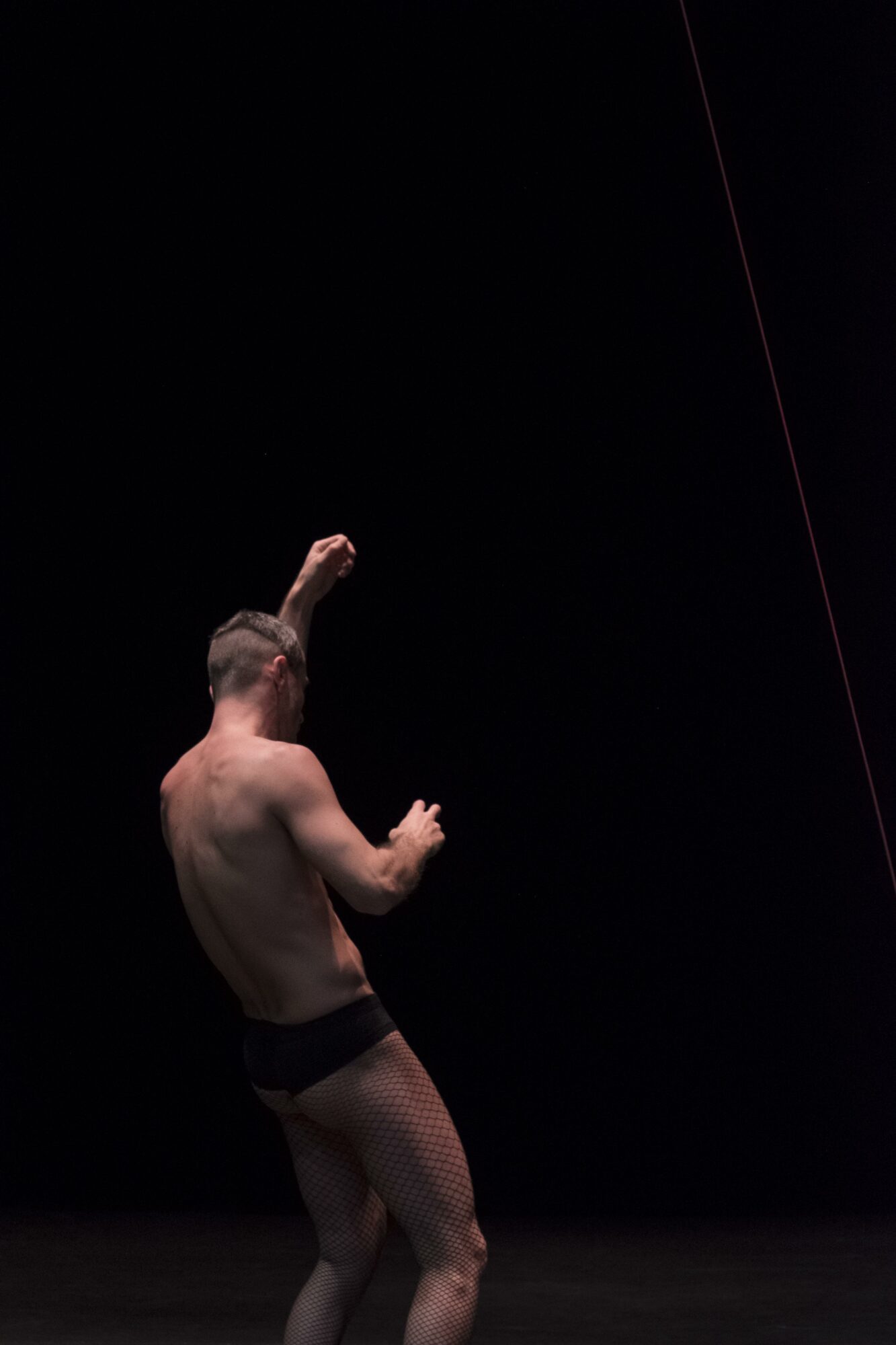
This solo is presented as a ritual celebrated between the secret of a mental room and the immense night of the cosmos. We hear murmurs of memory, echoes of ghosts, dreamed journeys. The dance answers to this necessary agitation and to this “need of consolation impossible to satisfy”. It crosses the depressions, the whirlwinds, the gusts, and aspires to gain this space of calm, of remission. A refuge, the eye of the cyclone.
The Cyclon Pursuit allows itself to be penetrated by the idea that ours deads influence our lives and live with us, we who still believe we are alive.
“Thoreau still had the forest of Walden – but where is the forest now where human beings can prove that it is possible to live in freedom outside the fixed forms of society?”, Stig Dagerman, Our need for consolation is impossible to satiate.
Excerpt from the interview with Wilson
These micro worlds are always induced by new physical constraints…
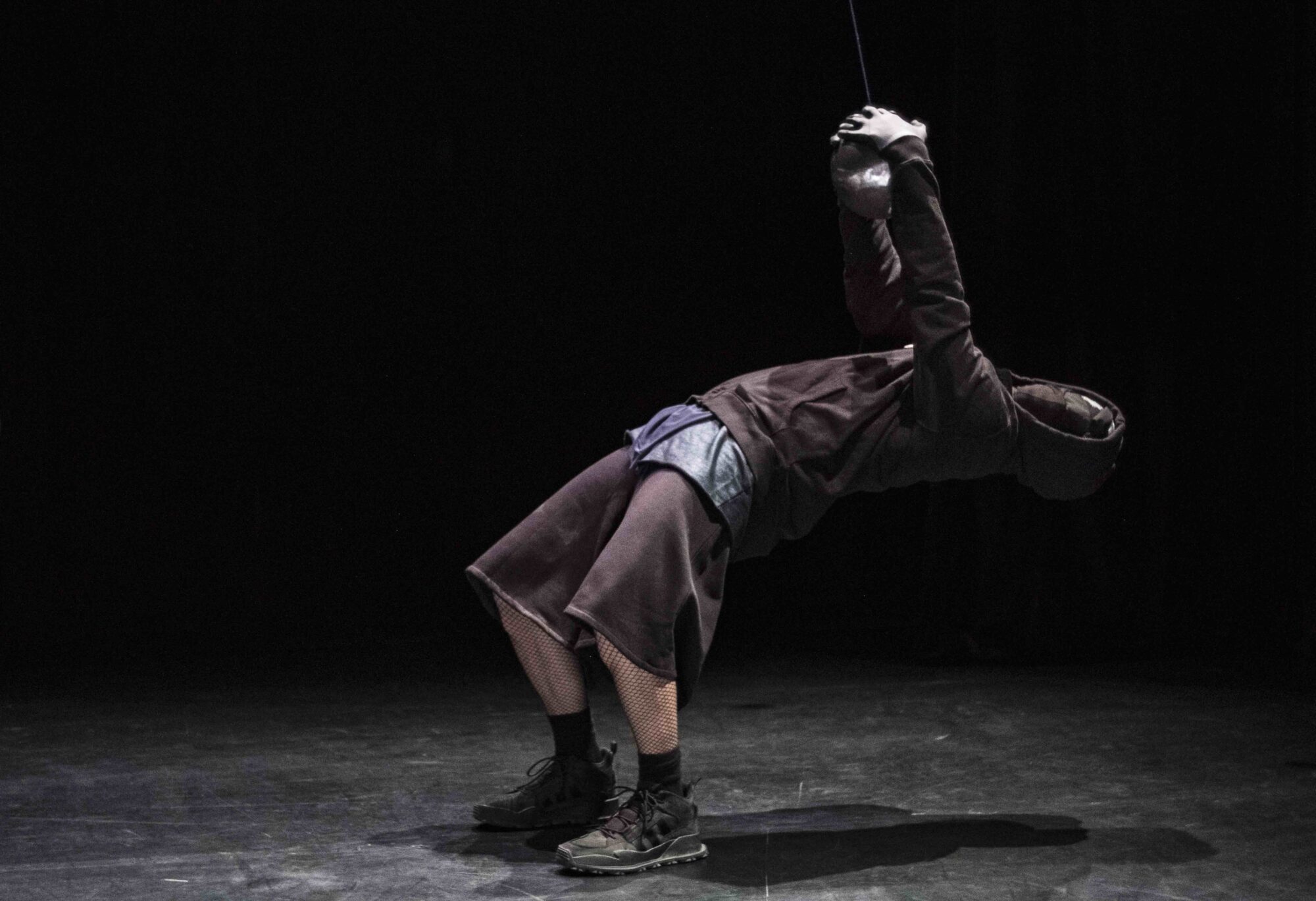
Indeed, I often find myself facing physical constraints. I believe there is a need to adapt, to learn to be flexible, to transform myself first and foremost, to put myself in situations that will allow me to become someone else. I really enjoy putting myself on the line, with the simplest effects, physical rules, like standing on my head, very simple things that bring me into contact with the world around me. It’s a game that gives me pleasure, a game to explore, to feel, to change myself, and to change—within the limits of my arms—the world around me.
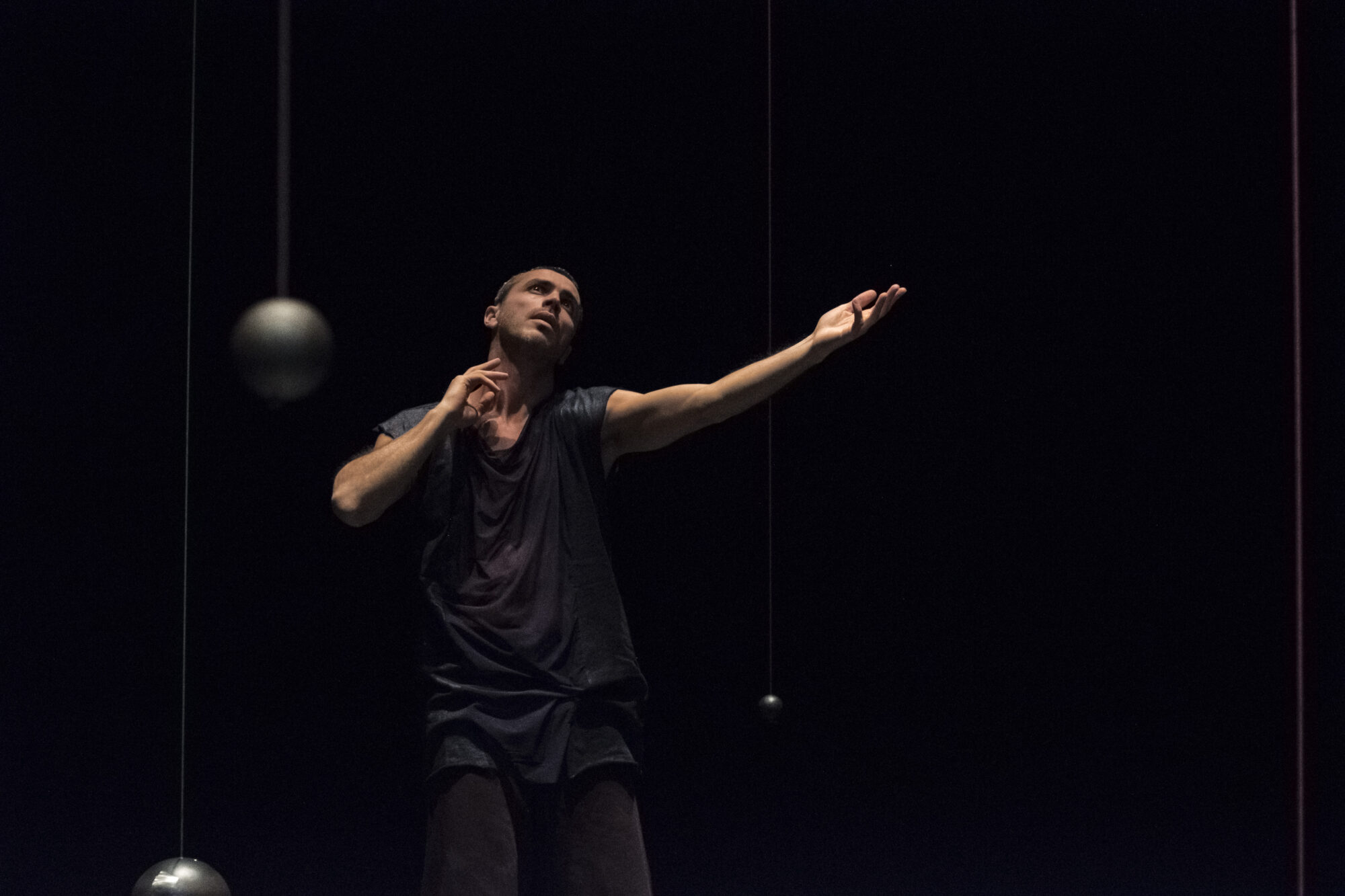
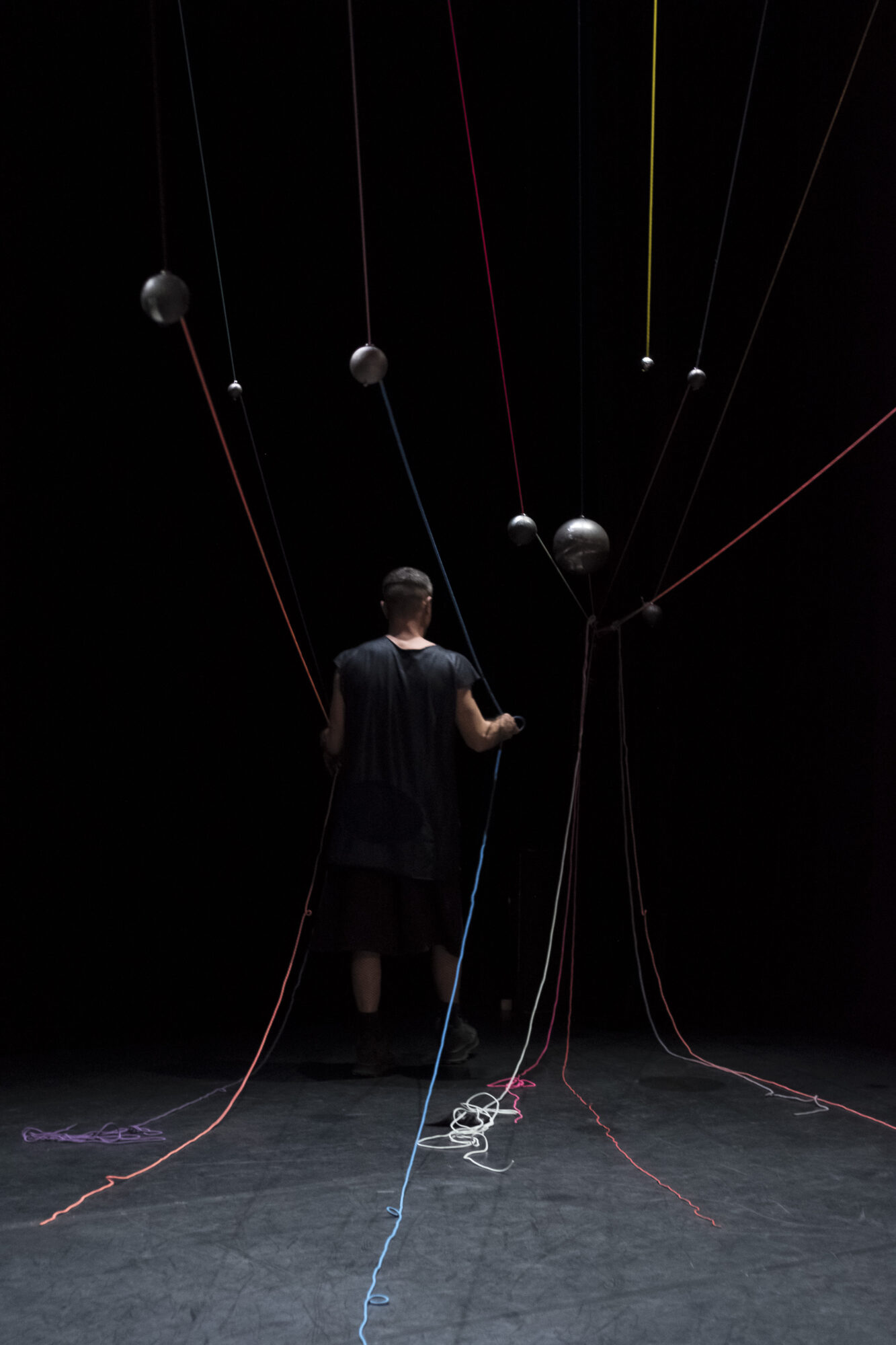
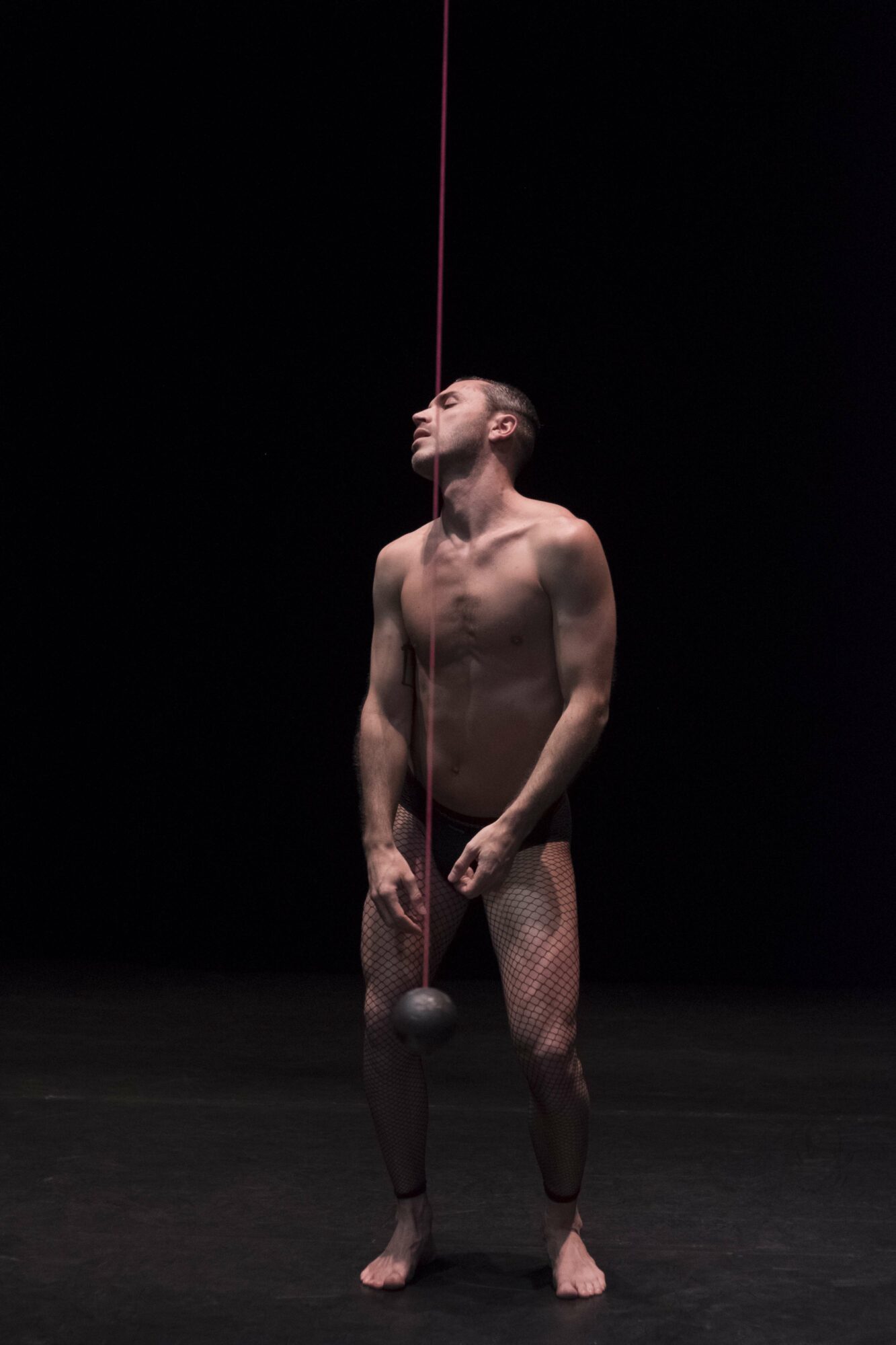
In La Poursuite du Cyclone, you move among fifteen large pendulums in motion.
I have a long-standing relationship with ropes, suspension, verticality, and hooks… After hanging upside down in La 36ème chambre (2011) and then by my wrists in the trio Derrière la porte verte (2012), pendulums with bodies had already appeared. Gravity is a law of physics that I cannot change, that I must accept. Here, I wanted to be able to act on my environment, in a space that I could transform and reconfigure. This space is like a mental chamber, the workings of my brain. During the creation process, I began to name these different pendulums as concepts, and then their interactions brought social relationships to the fore. This symbolically creates stories: What does it mean to be together? To be in sync? Out of sync? What is separation? But above all, I want to offer viewers a space for projection so that they can ask their own questions and construct their own narratives in relation to their personal histories.
At the beginning of the show, you announce that it will be a ceremony to let go of our dead…
I lost my father when I was a child and there was no ceremony. What do I do with that moment? Can I reinvent a ceremony? I don’t come to resolve that on stage, but one question stayed with me throughout the creative process: what do we do with our dead? How do we live with our dead, how do we stay alive? And then I realized that it wasn’t my dead who were in question, but rather my history, my old identities, my wounds, my depressions, my former romantic relationships, who I was, who I thought I was… How I had to let go of that in order to be reborn, to exist again in a different way.
| CREDITS | |
|---|---|
| Conception & performance | Eve Magot |
| Dramaturgy | en collaboration avec Céline Cartillier & Jean Baptiste Veyret Logerias |
| Scenography | en collaboration avec Pauline Brun |
| Light design | Juliette Romens |
| Music | Frannie Holder |
| Costume | Valentine Solé |
| Sound | Nicolas Martz |
| Production and touring | Léa Turner |
| Administration & production | Alice Marrey |
| Length | 50 minutes |
| Production | PLAN-T |
| Coproduction | Théâtre_ARLES, scène conventionnée d’intérêt national – art et création – nouvelles écritures |
| Chorège/Relais Culturel Régional du Pays de Falaise | |
| L’échangeur—CDCN Hauts de France | |
| Supports | « La Fabrique Chaillot » – Chaillot – Dance National Theater (Paris) |
| Théâtre de Vanves-scène conventionnée danse | |
| Le Gymnase—CDCN Roubaix | |
| Paris Réseau Danse | |
| CDCN Atelier de Paris—Carolyn Carlson |
| TOUR | |
|---|---|
| 20 september 2020 | Festival Jardins en scènes, Englancourt (France) |
| 30 june 2020 | Parc du Sausset, Villepinte (France), en partenariat avec IME Blancs Mesnil et Pasarela |
| 22 september 2019 | Festival Constellations, Toulon (France) |
| 6 april 2019 | Festival Ardanthé, Théâtre de Vanves (France) |
| 27-28 february 2019 | 1ere – Théâtre d’Arles (France) |
| 15 april 2018 | Lycée de Hotoie, Amiens – avec L’Échangeur–CDCN (France) |
| 31 march 2018 | Festival Ardanthé, Théâtre de Vanves (France) |
| 28 january 2018 | Festival Trente Trente 2018, Bordeaux (France) |